An apartment may look beautiful in photographs, but its true value becomes clearer through everyday living. A spacious-looking kitchen might lack practical storage, a stylish living room may have limited furniture placement options, or an attractive building entrance might become inconvenient if it is poorly maintained.
These details highlight an important principle of residential design: appearance is only one part of creating a comfortable living environment.
Thoughtful apartment design considers how residents move through rooms, use shared facilities, organize belongings, and manage everyday responsibilities. Building amenities and ongoing maintenance also contribute to the overall experience.
For renters in Ottawa, understanding how interior design and property management work together can help them evaluate apartments beyond their initial visual appeal.
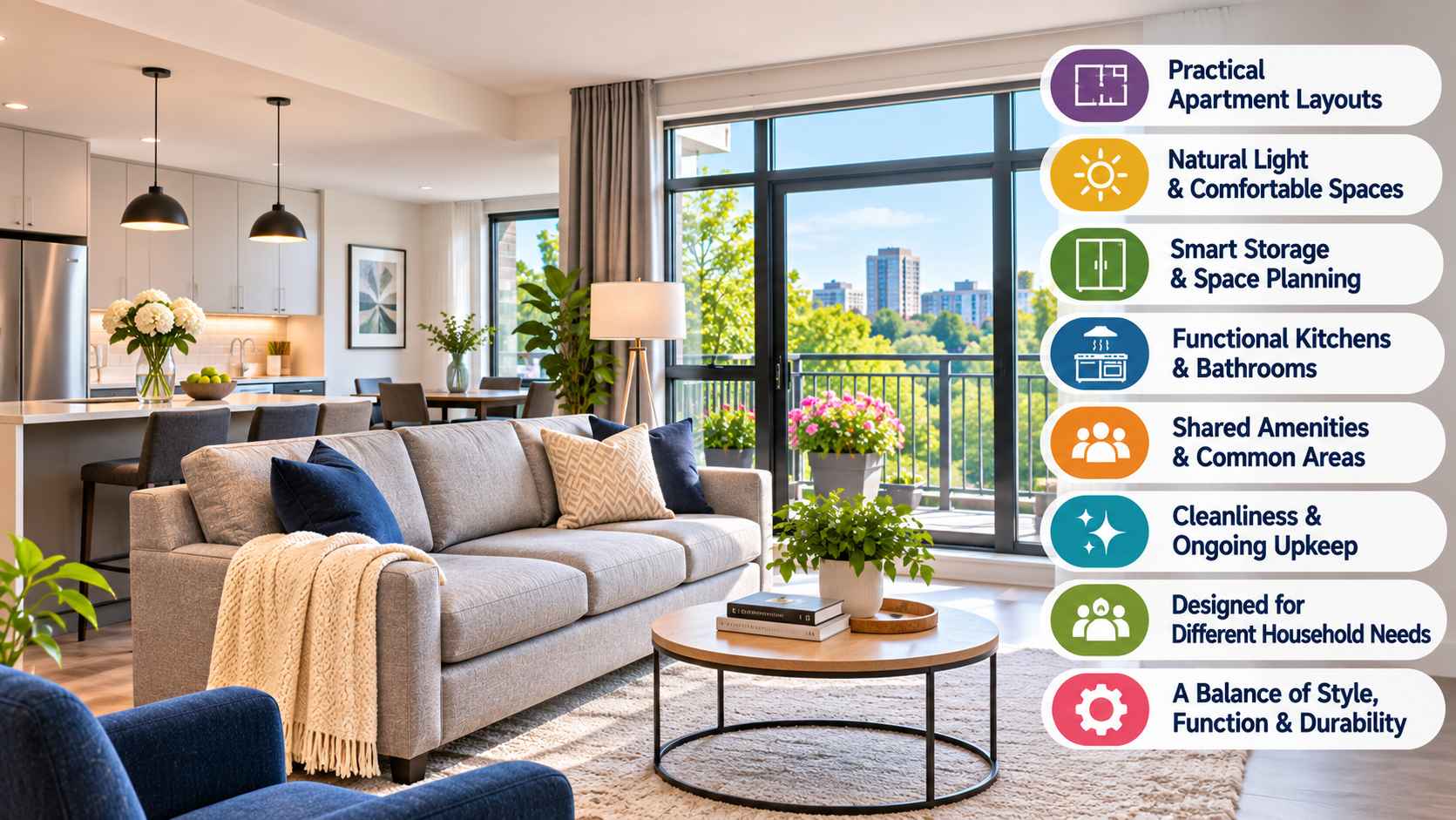
Why Practical Apartment Layouts Matter
The layout of an apartment influences how comfortably residents perform everyday activities.
A well-organized floor plan considers movement between rooms, furniture placement, privacy, and the relationship between shared and personal spaces.
For example, a compact apartment may feel more functional when the living and dining areas are arranged efficiently.
Meanwhile, a larger apartment can still feel inconvenient if doorways, hallways, or poorly positioned fixtures limit usable space.
Designing Around Everyday Activities
Apartment layouts should support common routines such as cooking, relaxing, working, and entertaining.
Someone working remotely may appreciate an area suitable for a desk, while a household with multiple occupants may prioritize bedroom privacy.
The most effective layout is not necessarily the largest. It is one that makes practical use of available space.
How Natural Light Influences Apartment Interiors
Natural light can influence how an apartment looks and feels throughout the day.
Window placement, room orientation, and surrounding buildings affect how much daylight enters a living space.
For example, a living room with appropriately positioned windows may provide a pleasant environment for reading or relaxing.
However, natural light should be considered alongside privacy, temperature comfort, and window coverings.
Large windows may require suitable shading to manage glare or unwanted heat.
When viewing apartments, renters can observe how daylight reaches different areas and whether the lighting conditions suit their preferences.
Artificial lighting also matters, particularly in kitchens, bathrooms, and workspaces where clear visibility supports everyday activities.
The Importance of Storage and Efficient Space Planning
Storage is one of the most practical elements of apartment design.
Without suitable organization, everyday belongings can quickly make living areas feel crowded.
Built-in closets, kitchen cabinetry, entryway storage, and accessible shelving can help residents organize their homes.
Making Small Spaces More Functional
In compact apartments, thoughtful storage placement can make a noticeable difference.
For example, an entryway closet may provide space for coats, footwear, and seasonal belongings without requiring additional furniture.
Kitchen cabinets that make effective use of available wall space can also support better organization.
Renters should evaluate whether existing storage accommodates their belongings rather than assuming that additional furniture will solve every limitation.
Choosing Functional Finishes and Durable Materials
Interior finishes contribute to the visual character of an apartment, but they also affect maintenance and usability.
Flooring, countertops, cabinetry, and wall finishes experience different levels of daily wear.
For example, entrance flooring may regularly encounter moisture and dirt from outdoor footwear.
Kitchen surfaces must accommodate food preparation, cleaning, and routine household activities.
Materials should therefore be evaluated for durability, ease of maintenance, and suitability for their intended use.
A visually attractive finish may not be the most practical choice if it requires frequent specialized care.
For property owners, selecting appropriate materials can support ongoing building maintenance.
For renters, understanding how finishes perform during everyday use can provide a clearer picture of the living experience.
Why Kitchen and Bathroom Design Deserve Attention
Kitchens and bathrooms are among the most frequently used areas in an apartment.
Their layouts and fixtures can influence convenience throughout the day.
Functional Kitchen Design
A practical kitchen should provide reasonable access to appliances, storage, preparation surfaces, and cleaning areas.
For example, a kitchen with limited counter space may make meal preparation more difficult, even if its finishes are visually appealing.
Cabinet placement and appliance access should support comfortable movement.
Comfortable Bathroom Layouts
Bathroom design involves similar considerations.
Adequate lighting, accessible storage, ventilation, and appropriately positioned fixtures contribute to everyday usability.
Renters should observe the condition of faucets, cabinets, ventilation features, and visible surfaces during a viewing.
An attractive bathroom should also function comfortably and be straightforward to maintain.
How Shared Amenities Contribute to Apartment Living
Apartment living often involves more than the private residential unit.
Depending on the property, residents may have access to shared laundry rooms, storage facilities, parking areas, outdoor spaces, or recreational amenities.
These features can influence convenience and how residents use the building.
For example, accessible laundry facilities may simplify household routines.
A shared outdoor area could provide opportunities for relaxation or social interaction.
However, amenities are useful only when they align with residents’ needs and are appropriately maintained.
Renters exploring professionally managed Ottawa apartment communities should review individual property descriptions to understand which facilities and services are available.
Not every building offers the same amenities, and some features may involve additional charges.
Creating Welcoming Entrances and Common Areas
The experience of apartment living begins before residents enter their individual units.
Entrances, hallways, elevators, and shared spaces influence how people navigate and experience the building.
Thoughtful design considers clear pathways, appropriate lighting, functional entrances, and suitable materials.
For example, a well-organized lobby may provide clear access to elevators, mail areas, and building information.
Hallways should accommodate everyday movement without unnecessary obstacles.
Shared gathering areas, where available, should also reflect the building’s intended use and residents’ practical needs.
Visual appeal contributes to the atmosphere, but accessibility, maintenance, and functionality remain equally important.
Why Cleanliness and Ongoing Maintenance Matter
Even thoughtfully designed buildings require consistent attention.
Floors experience wear, lighting fixtures need servicing, and shared facilities may occasionally require repairs.
Without appropriate maintenance, attractive spaces can become less comfortable or functional over time.
For example, damaged flooring in a common hallway may create inconvenience, while malfunctioning lighting can affect visibility.
Professional residential property management services can support building operations through maintenance coordination, tenant communication, and ongoing property oversight.
However, management arrangements vary between properties.
Renters should ask how maintenance requests are submitted, who coordinates repairs, and what procedures apply to urgent building concerns.
Cleanliness and upkeep are continuing responsibilities rather than one-time design decisions.
Designing Apartments for Different Household Needs
Apartment residents have different lifestyles, routines, and accessibility requirements.
A single professional may prioritize a quiet workspace and practical storage.
A family may value bedroom separation and convenient shared living areas.
Other residents may need accessible circulation routes or particular building features.
Thoughtful design recognizes these differences without assuming that one layout suits everyone.
For example, clear circulation areas and conveniently positioned controls may support a wide range of residents.
Flexibility is also valuable.
A room that accommodates a dining table might serve as a workspace when household needs change.
The objective is to create environments that support comfortable living while recognizing individual preferences.
What Renters Should Evaluate During an Apartment Viewing
A property viewing provides an opportunity to consider design, functionality, and building conditions together.
The Canada Mortgage and Housing Corporation offers guidance on renting a home, including information that can help people prepare for rental decisions.
During a viewing, renters can consider several practical questions:
- Does the apartment layout accommodate existing furniture and everyday activities?
- Is there enough storage for household belongings?
- How does natural light reach the main living areas?
- Are kitchen and bathroom fixtures functional and accessible?
- What shared amenities are available, and are there additional fees?
- Are entrances, corridors, and common areas appropriately maintained?
- How can residents report maintenance concerns?
- Does the apartment meet current and foreseeable household needs?
Taking notes during viewings can make comparisons more useful.
Balancing Interior Design With Long-Term Functionality
A comfortable apartment depends on the relationship between design, maintenance, and everyday usability.
Attractive finishes and modern features can enhance a space, but they should not overshadow practical considerations such as storage, room layout, ventilation, and building upkeep.
Similarly, shared amenities contribute most when they are relevant to residents and maintained appropriately.
For property owners and managers, considering durability and ongoing operational requirements is an important part of residential planning.
For renters, evaluating these details can help distinguish a visually appealing apartment from one that genuinely supports everyday routines.
The most thoughtfully designed rental homes balance appearance with function, creating living environments that remain comfortable, practical, and welcoming beyond the first impression.